
Best Sensory Spinning Chairs for Autistic Kids Pt 2
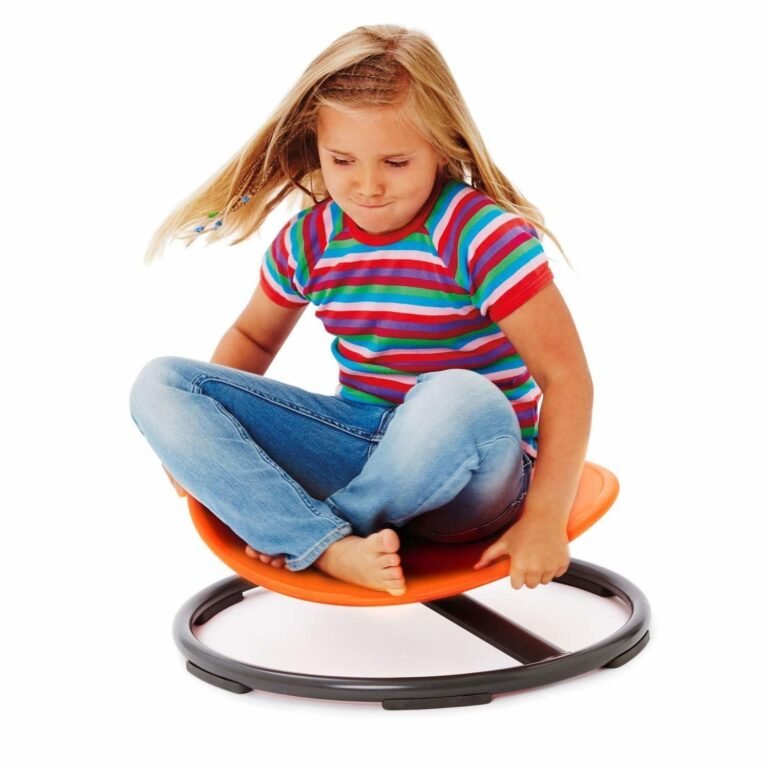
Spinning chairs have become a familiar sight in playrooms, therapy offices, and classrooms, and for good reason. Gentle rotational movement can offer a form of vestibular input, the sensory feedback your inner ear provides about balance and body position. For many kids, especially those with autism or ADHD, that steady spinning motion can feel organizing rather than overstimulating.
A sensory spinning chair gives kids a contained, predictable way to seek that movement instead of climbing on furniture or spinning in place on hard floors. The right chair should match your child’s size and weight, sit stable on your flooring, and offer enough seat depth or back support for how they actually like to move. Some kids want a simple bowl seat to spin freely in; others do better with a handle to hold onto or a backrest for extra security.
Weight capacity, base width, and seat material all affect how a chair performs day to day. A wider metal base generally resists tipping better than a narrow one, while a deeper seat can accommodate kneeling or lying down, which many sensory seekers prefer. Cleanable plastic surfaces matter too, since these chairs see frequent, high-energy use. The comparisons below look at six well-reviewed options to help you find one that fits your child’s needs and your home.
Best all-around pick: Zhenx Spinning Chair for Autistic Kids
Best no-assembly option: FERUERW Spinning Chair for Autistic Kids
Best compact base for smaller spaces: VEVOR Kids Swivel Chair
Best for kids who want something to hold onto: KidBloom Spinning Chair with Handle
Best for bigger kids needing extra seat room: Pterying Large Size Spinning Chair
Best for older kids, teens, and adults: HAPPYMATY Spinning Chair with Backrest
Zhenx Spinning Chair for Autistic Kids
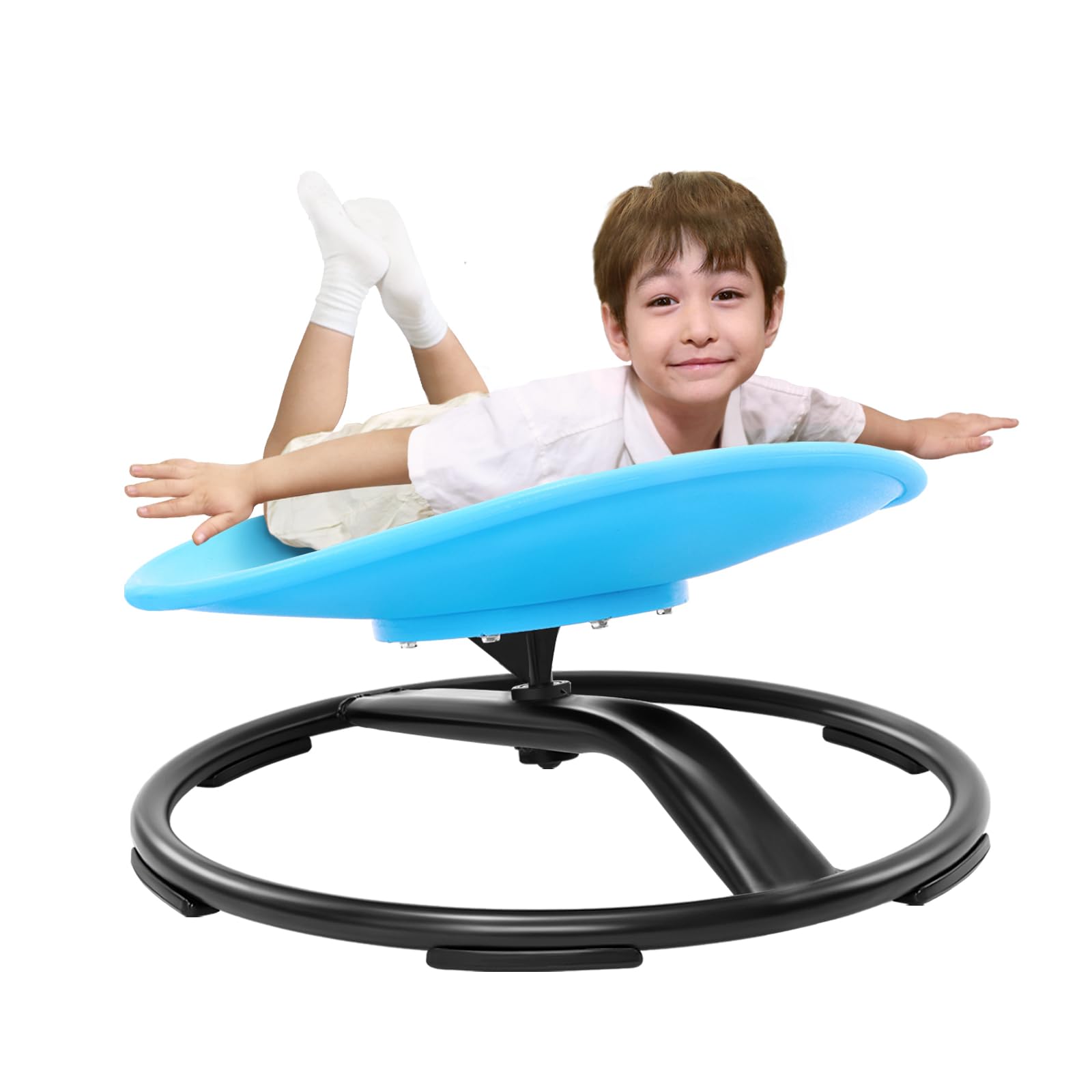
This is a solid choice if you want a ready-to-use chair with a wide age range and a sturdy metal base.
Pros
- No assembly required, straight out of the box
- 220-pound capacity fits a wide range of ages and sizes
- Smooth, burr-free polypropylene surface wipes clean easily
Cons
- Shallow seat height (10 inches) may feel low for taller kids
- Open-back design offers no lumbar support
- Round shape means no handle for extra grip
Parents consistently mention how simple this chair is to unbox and start using immediately, which matters when a child is eager to try it right away. The 22-inch-wide base gives it a low center of gravity, and non-slip rubber feet keep it planted on hard flooring during faster spins. At 12.5 pounds, it’s light enough to move between rooms but heavy enough not to tip during vigorous use.
The listed age range stretches from 3 to 18, though the low seat height means older or taller kids may find their knees higher than expected. Reviewers with autistic children in the 5 to 11 range report the most consistent satisfaction, describing it as a reliable calm-down or stimming tool that holds up to daily use.
FERUERW Spinning Chair for Autistic Kids

This chair suits families who want a slightly deeper seat and don’t mind a quick, tool-included assembly.
Pros
- Deeper seat (11 inches) accommodates sitting, kneeling, or lying down
- Widened, reinforced base designed to resist tipping
- BPA-free PP plastic meets ASTM and CPSIA safety standards
Cons
- Requires roughly 5 minutes of self-assembly
- Includes only one color option in this listing
- Some reviewers note squeaking after months of heavy use
The extra seat depth compared to similarly priced options gives kids more room to shift positions, which matters for sensory seekers who like to change how they sit mid-spin. The reinforced base and low center of gravity are built specifically to handle vigorous, repetitive spinning without wobbling.
Assembly takes a few minutes with the included tools, and most parents describe it as straightforward despite occasional confusing instruction steps. It’s a good fit for a dedicated sensory or calm-down corner where the chair will stay in one place most of the time.
VEVOR Kids Swivel Chair

A good option for smaller rooms thanks to its slightly narrower footprint without sacrificing stability.
Pros
- Ball-bearing swivel mechanism gives a notably smooth spin
- Triangular base design adds tipping resistance
- Recessed seat with polished edges for added comfort
Cons
- Base is a bit narrower than some competitors
- Must sit on a flat, level surface to avoid tipping
- Limited to one color in this listing
The 20.5-inch base is more compact than several alternatives here, which can be an advantage in smaller playrooms or shared bedrooms. The triangular base design and ball-bearing rotation combine to produce what many reviewers describe as an especially smooth, controlled spin.
This model has been adopted by at least one speech therapy clinic reviewer for sensory-focused sessions, a sign of its durability under repeated use by multiple children. It’s worth noting that a level floor is important here, since the narrower stance means it’s less forgiving on uneven surfaces than wider-based options.
KidBloom Spinning Chair with Handle
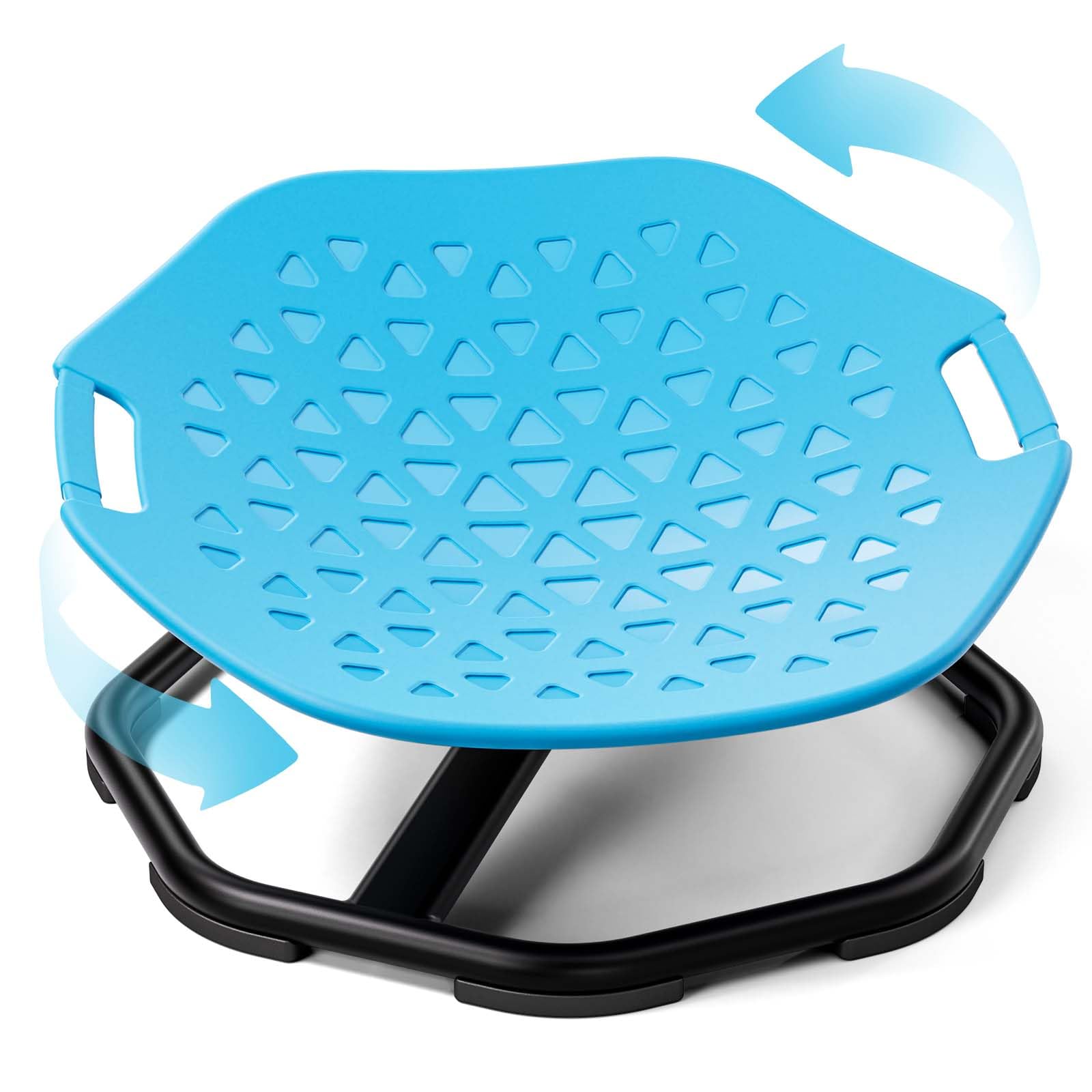
Consider this one if your child likes having something to grip while spinning, since it’s the only model here with a built-in handle.
Pros
- Ergonomic handle offers extra grip and confidence for spinning
- Silent swivel mechanism reduces noise during play
- Textured diamond panel adds visual and tactile interest
Cons
- Slightly lower weight capacity (210 pounds) than most competitors
- A few reviewers report handles cracking under heavy use
- Diamond shape takes up more visual space than round designs
The handle is the standout feature, giving younger or less confident spinners a way to steady themselves as they build comfort with the motion. Reviewers with ADHD and autistic children specifically mention that the handle helps kids feel more in control of their spin speed.
Some reports of handle breakage suggest checking in periodically on wear, especially with heavier or more aggressive use. The manufacturer has been responsive to replacement requests in at least one documented case, which is reassuring for a furniture purchase.
Pterying Large Size Spinning Chair
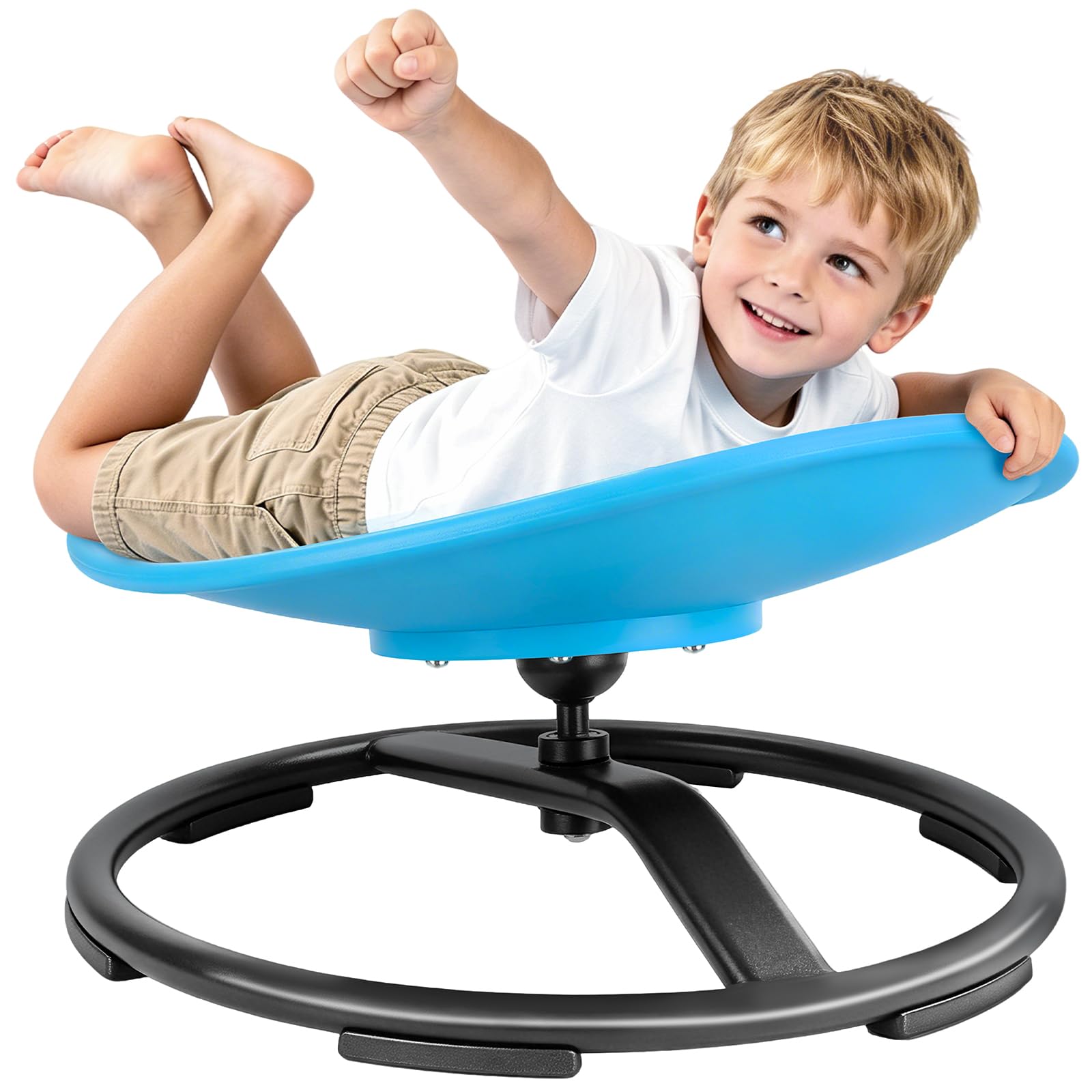
This is a strong pick for families with multiple kids or older children who need more seat room.
Pros
- Larger 21-by-19-inch seat fits a wider range of body sizes
- Sturdy pedestal base with solder joints for durability
- Includes assembly tool and sets up in about 5 minutes
Cons
- No backrest, which may not suit kids who want extra support
- Slightly heavier assembly step compared to no-assembly models
- Larger footprint needs more floor space
Multiple reviewers mention using this chair for both toddlers and children as old as 11, plus the occasional adult, a testament to its generous seat sizing. The pedestal base with welded joints feels notably solid during fast or repeated spins.
Families setting up sensory rooms or shared classroom spaces appreciate that this size works across a broad age range without needing multiple chairs. The lack of a backrest is worth considering if your child specifically seeks that added support.
HAPPYMATY Spinning Chair with Backrest
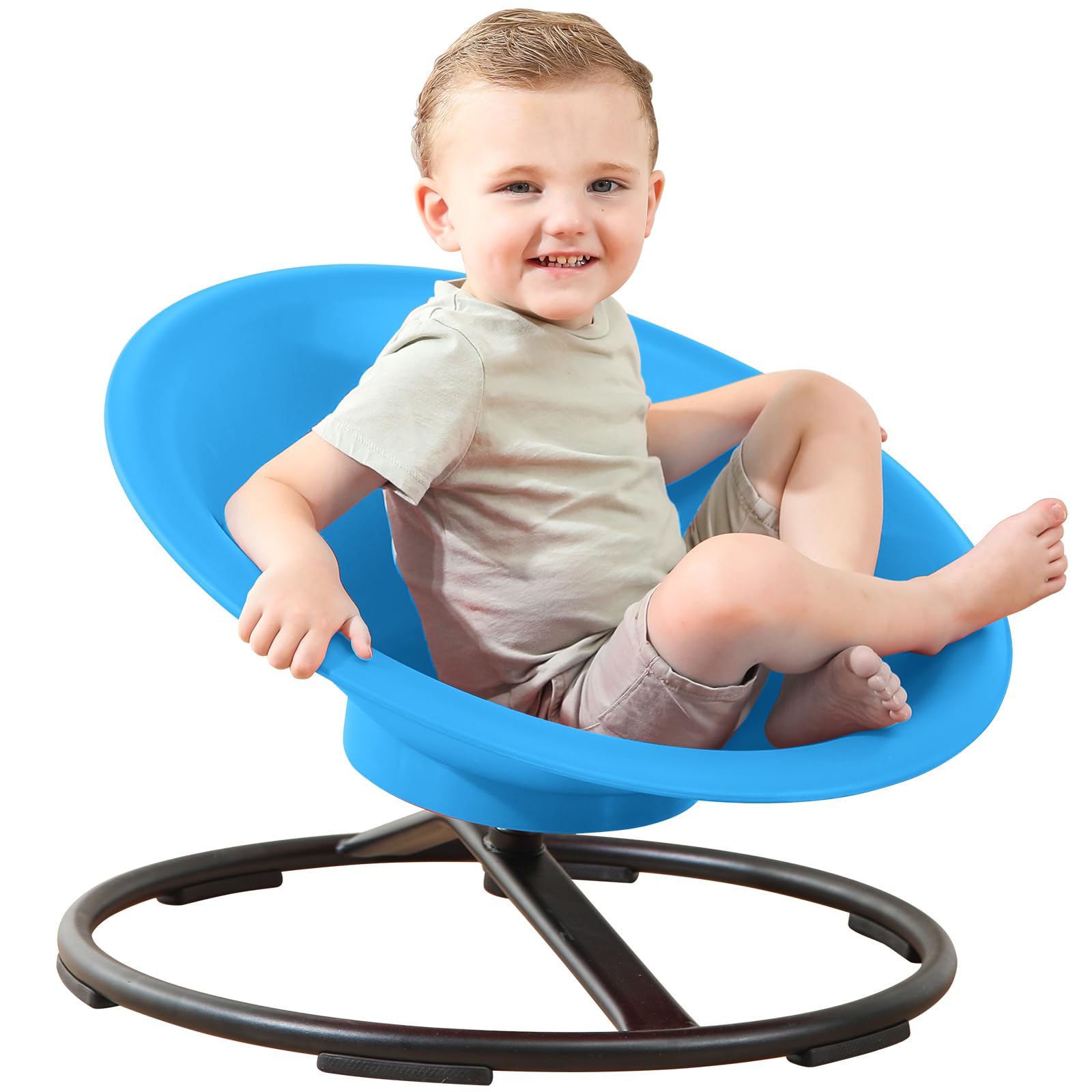
The tallest and deepest option here, this chair is best suited for older kids, teens, or even adults who want a more enclosed seat.
Pros
- Solid backrest offers more support than open-back designs
- Deep, bowl-shaped seat suits larger body sizes
- Rated for indoor and outdoor use
Cons
- Largest footprint (25.6 by 25.6 inches) needs more space
- Taller profile (18.5 inches) may feel less low-to-ground for toddlers
- Some reviewers note missing hardware on arrival
At nearly 26 inches wide and over 18 inches tall, this is the biggest chair in this comparison, and it shows in how it fits larger kids and adults comfortably. The solid backrest is a meaningful difference from the open-back designs above, giving kids who want more enclosure a place to lean back.
One reviewer describes using it successfully with a 110-pound 12-year-old, which speaks to its suitability for preteens and teens who’ve outgrown smaller sensory chairs. Double-check the hardware bag on arrival, since a small number of buyers report missing screws.
Buying Guide
Choosing a sensory spinning chair comes down to matching the design to your child’s size, movement style, and the space you have available. No single chair works for every child, since sensory preferences vary widely even among kids with similar diagnoses.
Weight Capacity and Base Stability
Most chairs in this category top out around 220 pounds, which comfortably covers toddlers through teens and even some adults. Look at base width in addition to the weight rating; a wider, heavier base generally resists tipping better during fast or off-center spinning.
| Feature | Why It Matters |
|---|---|
| Base width | Wider bases resist tipping during vigorous spinning |
| Weight capacity | Confirm it covers your child’s current and near-future weight |
| Non-slip feet | Keeps the chair anchored on hard flooring |
| Floor surface | Hard, flat surfaces generally perform better than carpet |
Seat Size, Depth, and Back Support
A deeper seat allows kids to kneel or lie across it, which many sensory seekers prefer over sitting upright. If your child likes leaning back or needs extra postural support, a model with a solid backrest is worth the added footprint.
Handles and Grip
A handle can help less confident spinners feel more secure and in control of their speed. If your child tends to grip tightly or spin aggressively, check reviews for any mentions of handle durability over time.
Assembly and Portability
Some chairs arrive fully built, while others need a few minutes of simple assembly with included tools. Weight matters too: chairs in the 11 to 14-pound range are easy for kids to move themselves or for you to relocate between rooms.
Safety and Supervision
- Always place the chair on a flat, level surface away from furniture edges or stairs.
- Supervise young children during initial use, since spin speed and direction can be unpredictable at first.
- Check seat and base periodically for loose hardware, especially with high-frequency daily use.
- Introduce spinning gradually, since motion tolerance varies significantly from child to child.
Matching these factors to your child’s size, sensory preferences, and available space will help narrow the decision far more effectively than comparing specs alone.